
Restaurant and hospitality cooling that actually copes
UK restaurant, cafe, bar and hospitality air conditioning that survives real duty cycles. What to spec, what to avoid, and what an install actually costs.
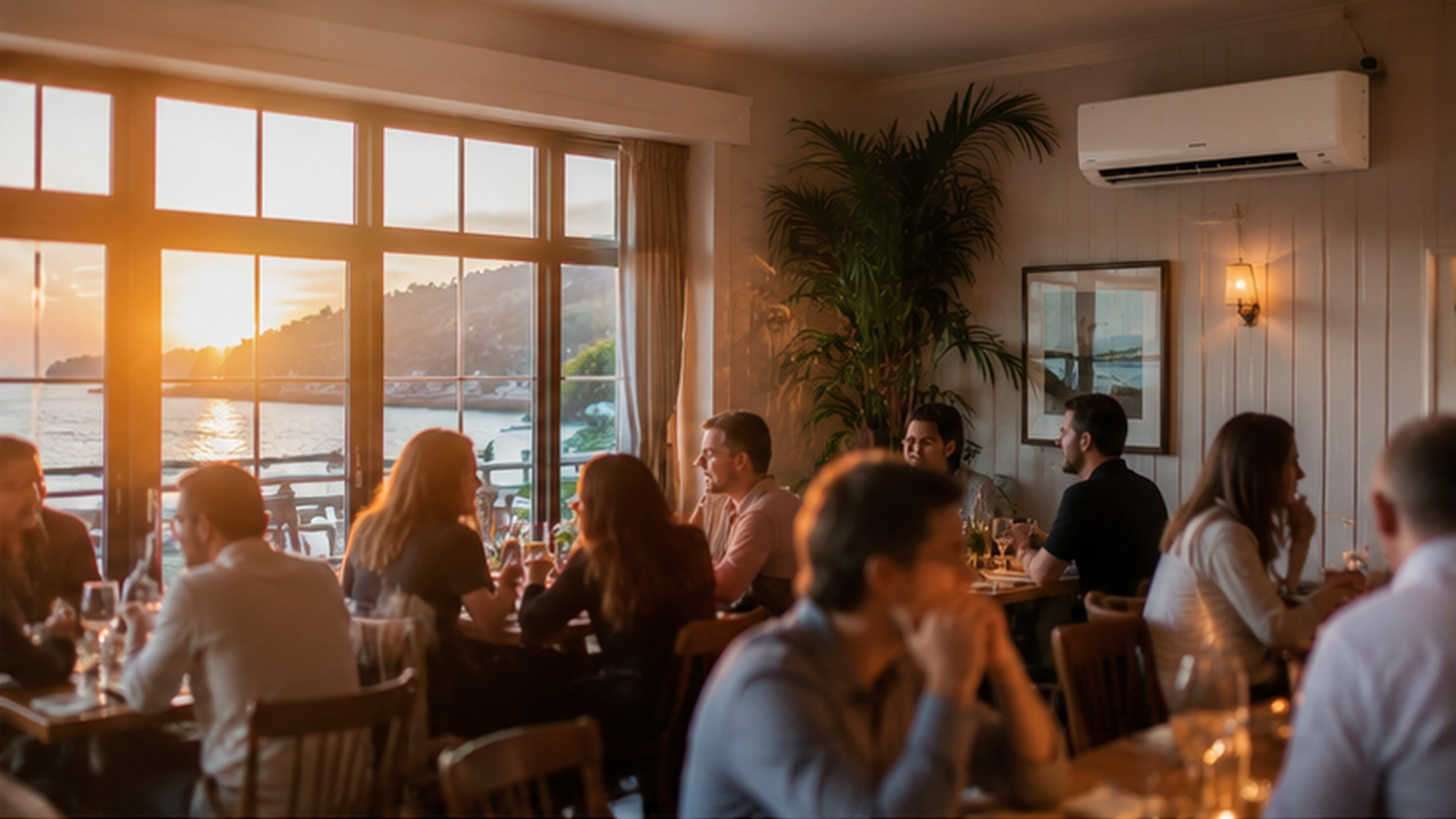
Restaurant and hospitality cooling has to work hard. Body heat from a full room, kitchen equipment throwing off 8 to 15 kW, front doors opening every ten seconds. Domestic-spec kit fitted by a domestic installer breaks inside two years. Here is what actually copes.
The three specific challenges of hospitality
- Uneven load. A cafe at 11am is empty. At 1pm it is packed. The cooling system needs to swing between quiet operation and full output in minutes.
- Kitchen heat. Even open-plan kitchens throw waste heat into the customer space. Cooling capacity has to absorb both the ambient load and the kitchen bleed.
- Air quality. Cooking smells, damp customer coats in winter, food service smells. Air con systems that recirculate need proper filtration.
Domestic wall-mount units handle none of the three well.
What to spec instead
Ceiling cassette units distribute cool air across the whole room rather than a single wall. Standard for cafes, restaurants, bars. Two or three cassettes on one outdoor VRV unit is the typical spec for a 100 to 200 square metre venue.
Ducted commercial systems hide the indoor units in a ceiling void and deliver cool air through grilles. Best aesthetic for high-end venues where visible plant would clash. More expensive to install, easier to service.
VRF systems for larger venues where different zones (bar, dining room, kitchen anteroom, toilets) need independent control. Overspec for anywhere under 300 square metres.
Real installed prices in 2026
- Small cafe (60-100 sq m, one or two ceiling cassettes): £5,500 to £9,000 fitted
- Medium restaurant (100-200 sq m, two or three cassettes): £9,000 to £16,000 fitted
- Large restaurant or bar (200-350 sq m, four cassettes plus VRF or ducted): £16,000 to £28,000 fitted
All prices include commissioning, F-Gas certification, and manufacturer warranty registration. Annual service contracts add £300 to £900 depending on system size.
The five things a good hospitality installer will insist on
- Sizing that assumes 100% occupancy, not average occupancy. A 60-seat restaurant needs cooling for 60 people plus staff plus kitchen bleed, even if the average diner count is 25.
- Separate control zone for the bar or kitchen anteroom. Uniform temperature across an entire hospitality space is impossible - staff areas and customer areas need different setpoints.
- Anti-microbial filters on any system serving a food environment. Standard filters harbour bacteria in a kitchen setting.
- Condensate management with a proper pump and drain, not gravity drainage. Restaurant kitchens are humid enough that gravity systems clog inside a year.
- Compressor located away from customer areas. Rear yard or roof, ideally. Alley placement is acceptable but noisier than customers expect.
What to avoid
Three specific things:
- Domestic-badged units even if they claim commercial performance. Duty cycles are different. Compressors on domestic units are rated for 6 to 8 hours per day. Hospitality runs 10 to 14.
- The single cheapest quote. Hospitality installers who genuinely specialise price higher than domestic installers moonlighting on commercial work. There is a reason.
- Any installer who does not ask about kitchen equipment and layout. Cooling that ignores the kitchen bleed undersizes by 30% or more.
Landlord permission - the specifics for restaurants
Restaurants are the tenancy category where landlord permission gets messiest. Three things to nail down in writing:
- Outdoor condenser location must be agreed before install. Rear alley, roof, or garden usually. Front elevation almost never.
- Grease trap and ventilation upgrade rights - because kitchen extract often needs work at the same time.
- Roof access rights for annual servicing.
Draft a two-paragraph letter, get both parties to sign, file with the tenancy paperwork.
The insurance angle nobody mentions
Restaurant business insurance changes profile when you fit commercial cooling. Two impacts:
- Contents cover premium usually drops 3 to 8% because cooler storage areas mean lower food spoilage risk.
- Public liability premium usually unchanged because outdoor condenser risks are captured by installer public liability during install and warranty period.
Notify your insurer before install day. Get written confirmation of no premium increase. Any decent commercial installer will remind you.
Get three commercial quotes
Tick “My business” at the top of the quote form and mention “restaurant” or “cafe” or “bar” in the comments. We match hospitality jobs with installers who work the sector regularly. Three fixed quotes back within 24 hours.
Ready for a real quote?
Get up to 3 fixed prices from vetted North West installers.
More on Commercial
Fitting air conditioning in a leased commercial unit
Most UK shops, salons and offices are rented, and the lease decides whether cooling can be fitted. Here is the alterations clause, the licence to alter, reinstatement risk, and what the whole thing costs.
Is there a legal maximum working temperature in the UK?
There is no legal upper limit on workplace temperature in the UK, but employers still have duties when an office or shop overheats. Here is what the law says and what it costs to fix.
Server room air conditioning: why comms rooms overheat and what cooling costs in 2026
A server rack pumps out heat 24 hours a day. Here is why office air con fails a comms room, what precision cooling actually needs, and what a proper UK install costs in 2026.