
Do I need planning permission for air con? UK rules 2026
UK planning rules for air conditioning outdoor units in 2026. Permitted development, listed buildings, conservation areas, flats and boundary distances explained.
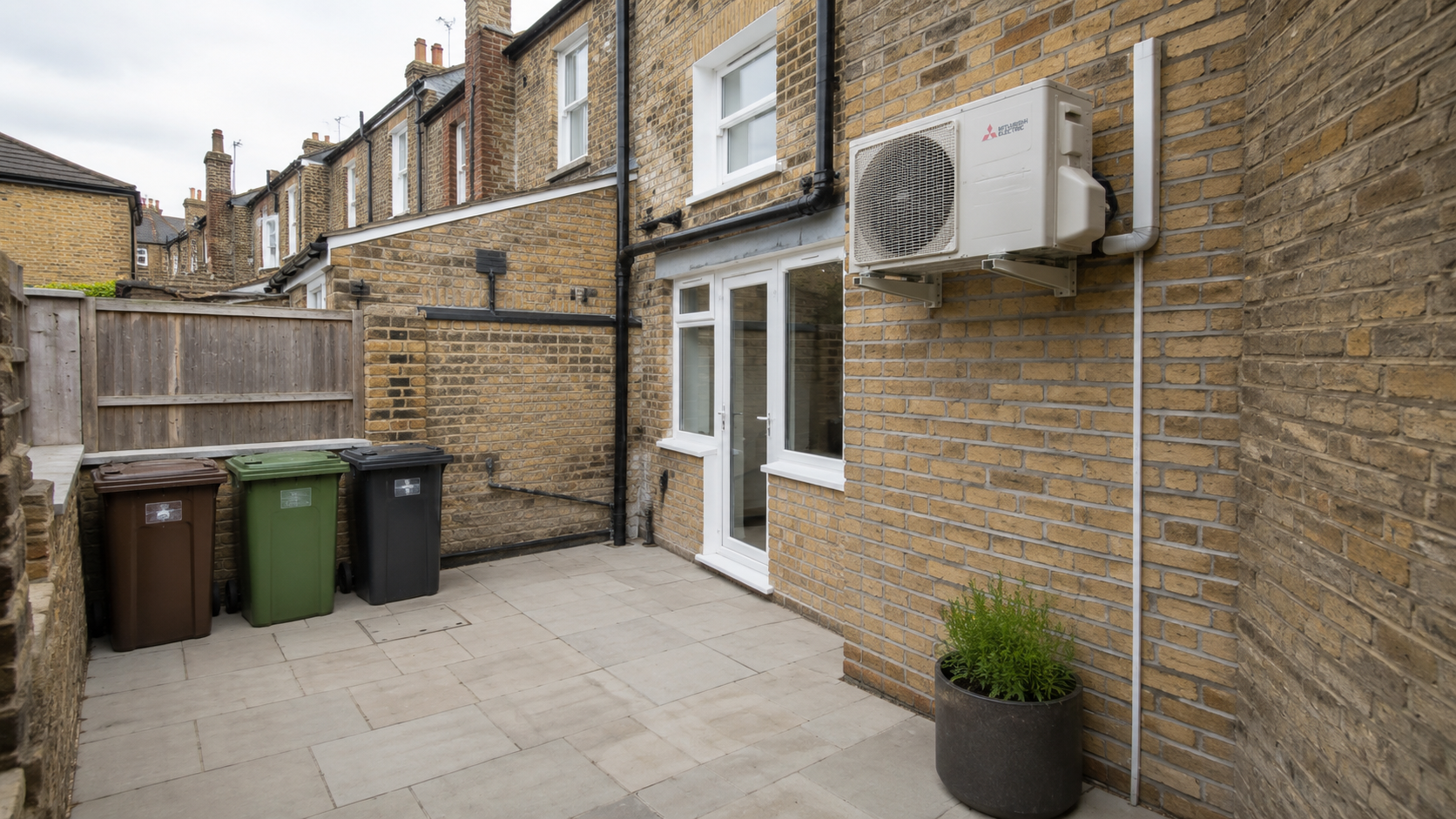
Most home air conditioning installs do not need planning permission. Some do. Getting it wrong means expensive enforcement and possibly forced removal. Here are the rules that apply in 2026.
The default: permitted development
An outdoor air conditioning unit fitted to your home is usually a “permitted development” - allowed without planning permission - provided you meet all of these conditions:
- The unit is not on a wall facing a highway or a road.
- The unit is at least one metre from the property boundary.
- The unit is not on the roof of the property, unless the roof is flat and the unit is more than one metre from the edge.
- The unit is not on the front of a building located within a conservation area.
- The outdoor unit output does not exceed 42 dB(A) at one metre.
- The unit is removed if it becomes no longer needed.
If all six apply, you can install without paperwork. Most modern residential installs meet all six comfortably.
When you DO need planning permission
Six situations that override the default:
- Listed building. Any external change to a listed building needs Listed Building Consent from the local council. Fitting an outdoor condenser to a listed building requires this consent whether or not the front is visible from the road.
- Conservation area with front elevation install. If your house is in a conservation area and the outdoor unit will be visible from the road on the front elevation, you need planning permission.
- Boundary within one metre. If the only viable spot for the outdoor unit is closer than one metre to your neighbour’s boundary, you need planning permission (which may or may not be granted depending on neighbour objection).
- Roof install on a pitched roof. Pitched-roof mounting is not permitted development. Flat-roof mounting is, provided the unit is not near the edge.
- Flats and maisonettes. Permitted development rights are more restrictive for flats. Most flat installs need either freeholder consent or planning permission depending on the lease.
- Article 4 direction. Some councils have removed permitted development rights for certain areas via an Article 4 direction. Check with your local council.
What “listed” and “conservation area” actually mean in practice
Listed buildings have three grades in England: Grade I, Grade II, Grade II*. All three need consent. There is no exception for “grade II is common” - the rules still apply.
Conservation areas are neighbourhoods (not individual properties) that the council has designated as having historic or architectural value. Being in a conservation area does not automatically require permission for air con. What triggers it is putting the outdoor unit somewhere visible from a public space.
Check both: search “listed buildings map” on the Historic England website for listed status. Search “conservation area map” on your local council website for conservation area status. Both take about 60 seconds.
The 42 dB noise limit
The permitted development rule caps outdoor unit noise at 42 dB(A) at one metre. Most modern outdoor condensers run at 48 to 55 dB at one metre. That would fail the test.
The saving detail: the rule is measured against the “background noise level” of the surrounding area. In an urban setting the background is already 40-45 dB, so an outdoor unit does not exceed the limit meaningfully. In a rural setting where the background is 25-30 dB at night, the same unit can breach the rule.
If your property is rural, expect the council to apply this rule more strictly. Consider a low-noise or “night mode” outdoor unit if you are within earshot of residential neighbours.
Flats and leasehold properties
Two questions to answer before any air con install in a flat:
- Does the lease permit installation? Some leases explicitly forbid external units. Check first.
- Does the freeholder or management company consent? Even where the lease permits, the freeholder usually has to approve the outdoor unit location and appearance.
Both usually take four to eight weeks. Start the paperwork now if you want a spring install.
Renting a house
Tenants need written landlord permission before any air con install. This is not planning permission - it is a contractual matter between you and the landlord. But no installer will begin work without seeing the landlord letter in writing.
What happens if you get it wrong
Enforcement is usually complaint-driven. Councils rarely proactively inspect. What triggers it:
- A neighbour complains about noise or aesthetic impact.
- A new mortgage or house sale surveyor spots an unauthorised install.
- A council officer notices during unrelated inspection.
If enforcement action starts, the council can require removal at your cost. The typical timeline is 8 weeks notice, appeal window, then either you remove or they take action. Fines are possible but rare for domestic cases.
Better to get it right the first time.
When to check with the council
Two simple heuristics:
- Listed or conservation area? Always check with the council before booking.
- Non-standard install (roof, tight boundary, unusual location)? Check with the council before booking.
- Everything else? A survey from a decent installer will flag anything unusual. They see this weekly.
Most installers offer to submit a planning application on your behalf as an optional extra. Typical cost £200 to £400 including the council fee.
Get three quotes and let the installer advise
Fill in the quote form and mention “listed” or “conservation area” in the comments if applicable. We match those enquiries with installers who deal with the paperwork regularly.
Three fixed quotes back within 24 hours.
Or check the prices page for a rough bracket first.
Ready for a real quote?
Get up to 3 fixed prices from vetted North West installers.
More on Guides
Air conditioning for a garden room or garden office
Garden rooms cook in August and freeze by November. One split system handles both jobs. How to size it, what the electrics need, where the condenser goes, and what a garden room install costs in 2026.
Air conditioning in a flat: what leaseholders need to know
Flats overheat worse than houses and carry the tightest rules on fitting cooling. Here is what your lease says, where the condenser can go, what freeholder consent costs, and the options when there is no outdoor space at all.
What temperature should you set your air conditioning?
Setting 16C does not cool a room any faster, and it costs you for the privilege. Here is the setpoint that works in a UK summer, what each degree adds to the bill, and when dry mode beats cool mode.