
Commercial cooling: prep now for next summer
October is nine months from the next heatwave. Businesses that plan cooling now beat the panic in June. Here is a practical timeline.
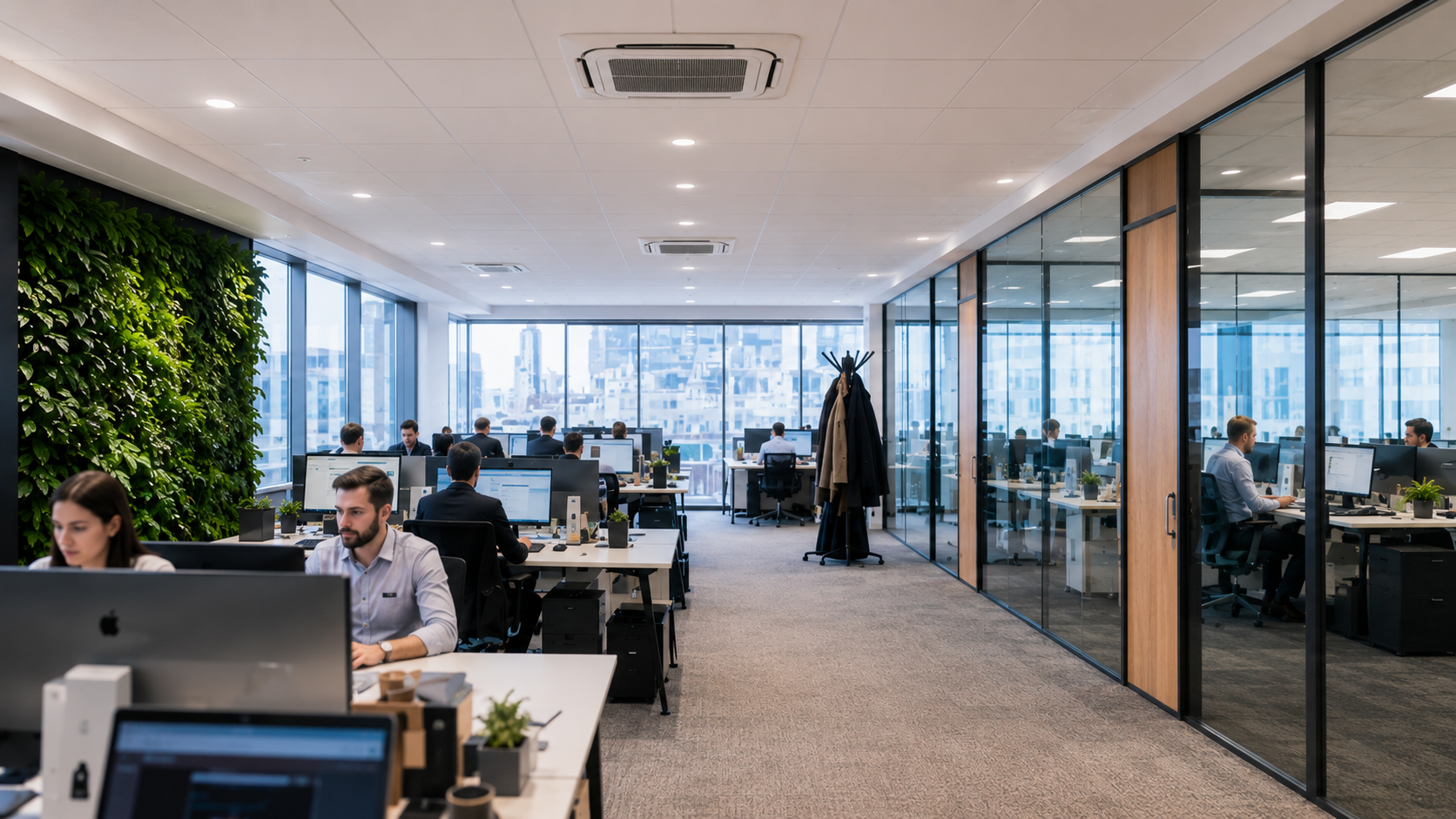
If your business felt the heat this summer, October is the month to fix it. Not next April. October.
Why nine months out is the right window
Commercial air con is a different beast to a bedroom split. The kit is heavier, the electrical work is more involved, and if the outdoor unit sits on a roof there is usually a landlord conversation and sometimes a structural check. All of that takes time you do not have in June.
Nine months is enough to:
- Get three quotes from serious commercial installers who are not sprinting between other jobs.
- Get landlord sign-off and any structural or planning input.
- Get on the installer’s book at a sensible price rather than an emergency one.
- Have the install finished and commissioned by April, comfortably ahead of the first warm week.
The rough timeline
October to November: quote and specify. Get three surveys, pin down the brand, model, and install approach. Talk to the landlord early - most rented commercial units need written permission for external condensers, and that alone can take a month.
December to January: contracts and commissioning windows. Fixed price agreed. Deposit paid. Install slot booked for February or March.
February to March: install. Weather is manageable, installers have space, tenants are not in the middle of a Christmas trading peak or a summer holiday shutdown.
April: commissioning done, system running, staff briefed. You are five months ahead of the panic wave.
What “commercial” actually means for pricing
The word covers a huge range. Rough brackets for common jobs:
- Small office, 60 to 100 square metres, single cassette: £3,500 to £6,000 fitted.
- Retail unit or salon, 100 to 200 square metres, two or three cassettes: £6,000 to £11,000 fitted.
- Restaurant, gym, or medium retail, 200 to 400 square metres: £11,000 to £22,000 fitted.
- Multi-floor office, VRF system: £22,000 upwards.
All fitted, VAT included, F-Gas certified, standard commercial warranty. The prices page has the full table.
The commercial-only decisions
Three questions that do not come up in domestic quotes:
- Duty cycle. Domestic units run 4 to 6 hours a day. Commercial units often run 12. The kit needs to be specified for that. Undersized commercial units burn out inside three years.
- Service contract. Annual F-Gas services are a legal requirement above certain refrigerant thresholds. Factor in £180 to £500 per year for the service, depending on system size.
- Redundancy. Server rooms and food-service kitchens usually need at least partial redundancy so a single compressor failure does not shut the business. Add 30% to 50% to the base install cost.
What to send an installer for a first estimate
An installer can rough-price a commercial job over email if you send:
- Floor area in square metres.
- Occupancy pattern (how many people, how many hours).
- Ceiling type (suspended, plaster, exposed).
- Outdoor unit location options (roof, wall, ground).
- Photos of the space.
If they will not price without a site visit, that is often the right answer for anything above £10,000. Insist on a proper survey.
Get a real commercial quote
Tick “My business” at the top of the quote form and we will send your enquiry to up to three vetted commercial installers who cover your postcode. Nine months from now you will be very glad you did this in October.
Ready for a real quote?
Get up to 3 fixed prices from vetted North West installers.
More on Commercial
Fitting air conditioning in a leased commercial unit
Most UK shops, salons and offices are rented, and the lease decides whether cooling can be fitted. Here is the alterations clause, the licence to alter, reinstatement risk, and what the whole thing costs.
Is there a legal maximum working temperature in the UK?
There is no legal upper limit on workplace temperature in the UK, but employers still have duties when an office or shop overheats. Here is what the law says and what it costs to fix.
Server room air conditioning: why comms rooms overheat and what cooling costs in 2026
A server rack pumps out heat 24 hours a day. Here is why office air con fails a comms room, what precision cooling actually needs, and what a proper UK install costs in 2026.