
Air conditioning vs heat pump vs central heating - what is the difference
Air con, heat pump, and gas central heating all warm your home in different ways. Here is what each one does, what it costs, and which suits which UK home.
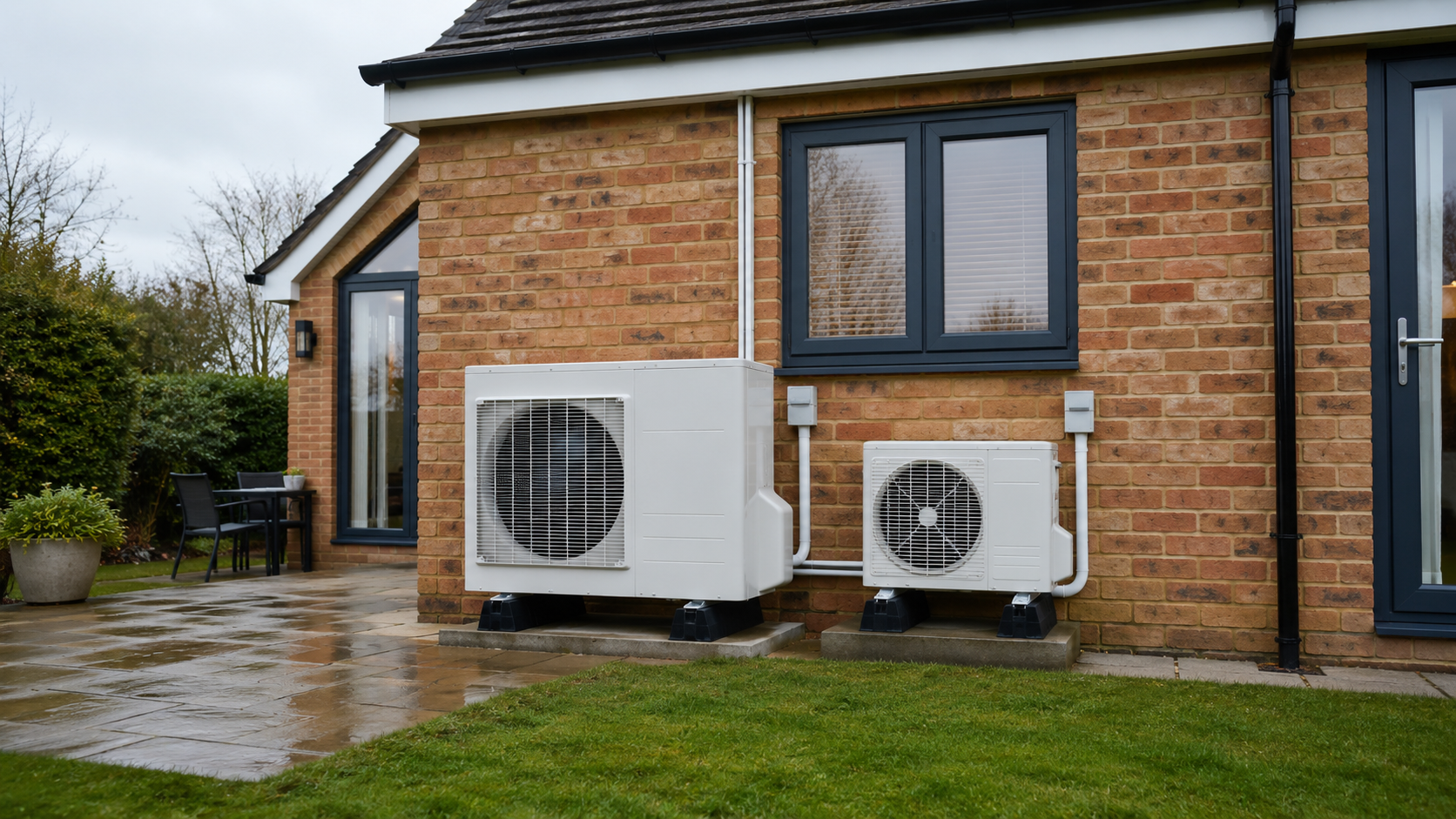
The three technologies show up in the same conversations but do different jobs. Get them mixed up and you buy the wrong thing.
Air conditioning
A modern split system moves heat from one place to another. In summer, from inside to outside. In winter, from outside to inside. One box handles both.
Best for: one or two rooms you actually use. Bedrooms, home offices, main living rooms. Fitted, £1,800 to £5,500 depending on how many heads.
Running cost on heat mode: about 15p per hour once the room is up to temperature. Cheaper than any electric radiator, cheaper than gas central heating per room if you only heat one or two rooms at a time.
Not for: whole-house heating on a cold February morning.
Air source heat pump
A heat pump for the whole house. The technology is the same as a split air con - refrigerant, compressor, evaporator - but the scale is different. A heat pump replaces your boiler and heats your whole house through radiators or underfloor heating.
Best for: whole-home heating in place of a gas boiler. Well-insulated homes. New builds. Retrofits where the government’s Boiler Upgrade Scheme grant covers £7,500 of the cost.
Fitted, £8,000 to £16,000 before grants.
Running cost: about a third of gas central heating for the same output, if the house is well insulated. Worse than gas if the house is draughty.
Not for: a quick summer cooling fix. A regular air source heat pump does not cool.
Gas central heating
The default UK setup. A boiler burns gas, heats water, pumps it through radiators. Whole house, one thermostat, one bill.
Best for: whole-home heating in a UK winter, especially in draughty older houses. Familiar tech, plumbers everywhere, parts on every wholesaler shelf.
Running cost: about 8p per kWh of heat delivered, so a typical UK home spends £1,000 to £1,500 a year.
Not for: cooling. Zoning individual rooms in most existing setups.
Which pairs with which
The households who spend the least on comfort tend to combine two of these:
- Gas central heating for winter, air conditioning for summer and shoulder seasons. Skips the £8,000+ heat pump install. Uses gas when it is coldest and cheapest per unit of heat, uses air con when it is milder.
- Air source heat pump for winter, split air con for a couple of rooms in summer. Replaces gas entirely. Works in new-builds and well-insulated retrofits.
- Air conditioning as the only “heating” for a flat with electric heating baseline. Common in small London flats where installing a heat pump is not practical.
How Cooler Spaces fits in
We match air conditioning installs. If you want a full heat pump replacement for gas central heating, you need a different service - MCS-certified heat pump installers, a Boiler Upgrade Scheme application, and usually an EPC assessment first.
If you want cooling, or you want cheaper heating for the rooms you actually use, an air conditioning install is the right call. Get up to 3 free quotes from vetted North West installers. Takes about a minute.
Ready for a real quote?
Get up to 3 fixed prices from vetted North West installers.
More on Guides
Air conditioning for a garden room or garden office
Garden rooms cook in August and freeze by November. One split system handles both jobs. How to size it, what the electrics need, where the condenser goes, and what a garden room install costs in 2026.
Air conditioning in a flat: what leaseholders need to know
Flats overheat worse than houses and carry the tightest rules on fitting cooling. Here is what your lease says, where the condenser can go, what freeholder consent costs, and the options when there is no outdoor space at all.
What temperature should you set your air conditioning?
Setting 16C does not cool a room any faster, and it costs you for the privilege. Here is the setpoint that works in a UK summer, what each degree adds to the bill, and when dry mode beats cool mode.